
The Smart Way to Pair an Inground Pool and Pavilion in Tuscarawas Township, OH: Comfort Zones, Traffic Paths, and Four-Season Use

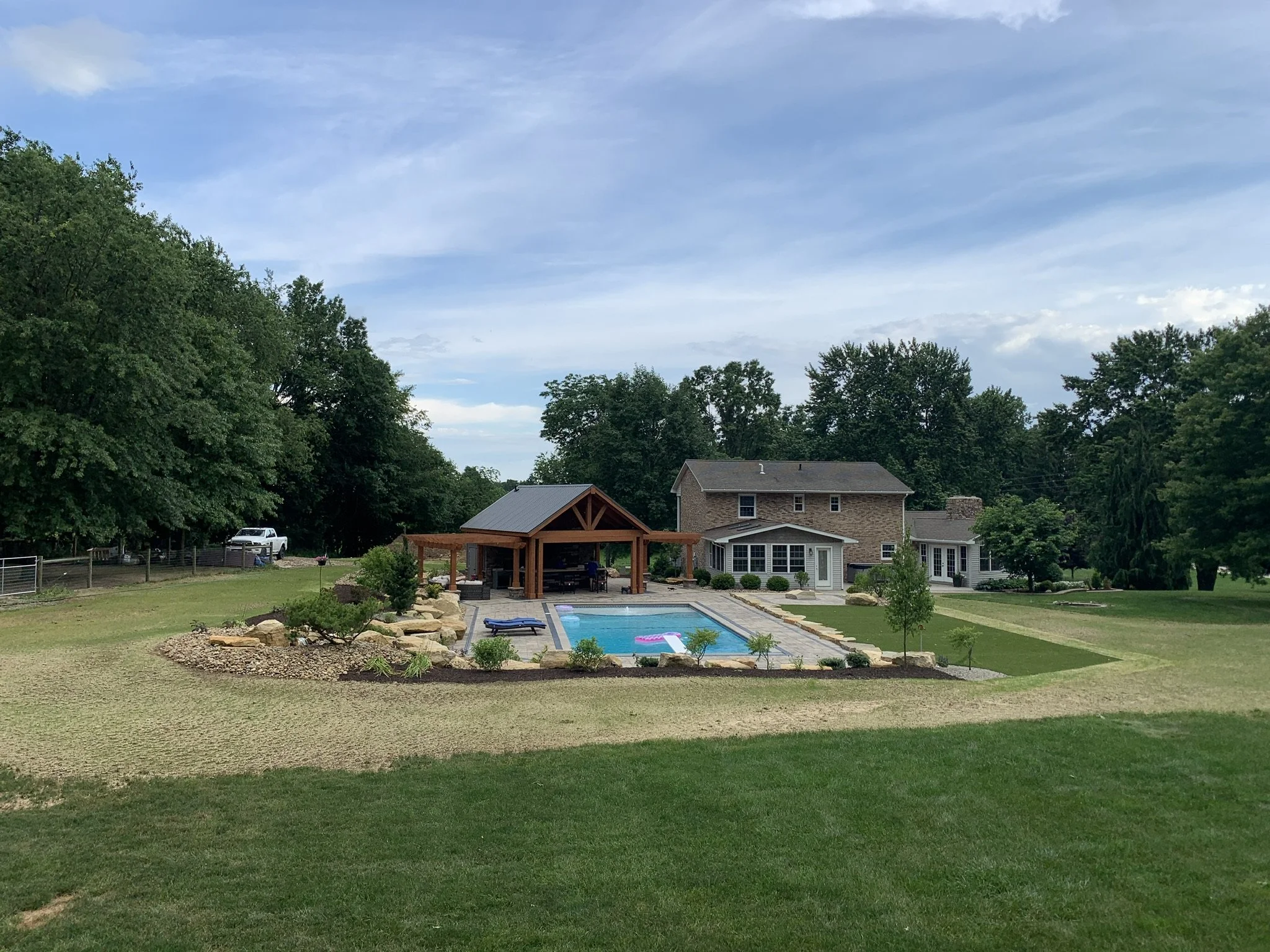
A luxury backyard isn’t just a pool with a structure nearby. It’s an experience that feels intentional from the first step outside to the last late-night conversation under warm lighting. If you’re planning an outdoor living space upgrade, pairing an inground pool & pavilion in Tuscarawas Township, OH, the smart way comes down to how you design for comfort, movement, and year-round use — not just how it looks in a photo.
That’s where thoughtful landscape design makes all the difference: comfort zones for sun and shade, traffic paths that flow naturally, and materials chosen for Northeast Ohio’s freeze-thaw cycles, spring rain, and humid summers.
Tuscarawas Township and the surrounding area sit in a climate that gives you the full four-season experience: warm summers perfect for swimming and entertaining, cold winters that test hardscapes, and shoulder seasons full of rain and temperature swings.
That means your luxury poolscape design needs to be beautiful, yes — but also built around drainage, stable base prep, and layout decisions that stay comfortable and functional even when the weather changes. A well-placed custom pavilion can be the feature that turns your pool area into a true gathering hub, not just a “nice backyard” that only gets used on perfect days.
Related: Top Benefits of Adding a Pavilion in Plain Township, OH, & Canton, OH, Backyards
Start With How You Want to Live Outside (Not Just What You Want to Build)
Below, our experts have outlined a smart, design-forward way to think about the pool-and-pavilion pairing, from the first planning conversation to the finishing touches that make the whole space feel polished and effortless.
The best outdoor spaces aren’t designed like a checklist. They’re designed like a lifestyle map. Before anyone talks about pool shapes or pavilion rooflines, the smartest planning starts with one question: how do you want the space to feel, and how do you want to use it?
Most high-end poolscapes have three distinct “living zones,” and the pavilion either anchors them or connects them. These zones include:
Swimming Zone
The swimming zone is the pool itself — plus any lounging space that’s directly related to being in and out of the water. This includes steps, tanning ledges, and the deck area that stays busy with towels, chairs, and sun exposure.
Shade & Refresh Zone
The shade-and-refresh zone is where the pavilion shines. It’s where you get out of the sun without going inside. It’s where drinks stay cold, snacks stay out, music plays, and the day stretches longer.
Dining & Social Zone
The dining-and-social zone is where you gather with people who may never step into the pool at all. This is often a pavilion dining table, an adjacent patio, a bar counter, or a nearby fire feature that extends the season.
Your pool and pavilion work best when each zone has a clear purpose and a natural relationship to the others.
When the zones are blurred, the space tends to feel disorganized — like you’re always stepping around furniture or walking too far for something. When the zones are defined, the whole outdoor living space upgrade feels effortless.
Comfort Zones: The Secret to a Poolscape That Feels “Right”
Luxury isn’t always about size. It’s about comfort. A pool-and-pavilion pairing works when the space gives you options — sun, shade, breeze, warmth, privacy — without needing to constantly move furniture or fight the elements.
In Tuscarawas Township, summer days can be warm and humid, and the best poolscapes plan for heat management. A pavilion placed strategically can provide shade at the hottest part of the day, and it can also create a cooler retreat when the pool deck is baking.
A smart comfort-zone plan typically includes:
Sun-exposed area
A sunny side for swimmers and loungers who want full exposure. This is where tanning ledges, chaise lounges, and sun-friendly finishes belong.
Shaded space
A shaded pavilion zone that catches the breeze. Pavilion placement matters. If it’s too tucked into a corner, it can feel stagnant. If it’s too exposed, it can lose the cozy “room” feeling that makes it inviting.
Transitional element
A transitional zone between the pool deck and the pavilion, where you’re not dripping water onto seating, but you’re also not trekking across the yard. This might be a short paver walkway or a slightly raised deck zone that creates separation without distance.
Even small adjustments in placement and orientation can change how the space feels at different times of day. That’s why high-end landscape design includes sun angles, prevailing wind patterns, and sightlines as part of planning — not just aesthetics.
Traffic Paths: How to Prevent the “Crowded Backyard” Problem
Here’s what happens in a lot of pool projects: the pool is placed where it fits, the pavilion is placed where it looks nice, and then… people start using it. Suddenly, the space feels crowded. Guests walk through lounge areas to get to the pavilion. Wet footprints cross the dining zone. Kids run behind chairs. You end up with a beautiful backyard that feels like it wasn’t meant for real life.
Traffic paths solve that.
A traffic path is the natural line your body wants to take from one place to another. When those paths are designed intentionally, the space feels calm. When they aren’t, the space feels chaotic.
In a luxury poolscape design, you typically want three primary traffic paths:
House-to-pavilion path. This should feel direct and comfortable. It’s often where people carry food, drinks, and serving trays. It should be wide enough to move in pairs and durable enough for frequent use.
House-to-pool entry path. This path needs to be safe, slip-resistant, and intuitive. People naturally move from the house to pool steps, outdoor showers, or towel stations. Your layout should support that without crossing dining areas.
Pool-to-pavilion path. This is the “cool down” route: out of the water, into shade, grabbing a drink, sitting down. This path should be short and smooth — but it should also keep water away from dining and electronics zones.
Pavers, natural stone, and other hardscape materials can be used to gently guide traffic without shouting it. A shift in paver pattern, a subtle border, or a change in elevation can communicate where people should walk without a single sign or fence.
And in Northeast Ohio, these paths also need to be built for durability. Freeze-thaw cycles and spring moisture mean base prep and drainage aren’t optional details — they’re the foundation of a poolscape that stays level and beautiful over time.
Related: It’s the Season for Lounging by the Inground Pool in the Lake Township and Uniontown, OH Areas
Four-Season Use: Don’t Let Your Pool Area Become a “Summer Only” Space
A pool is inherently seasonal in Ohio, but your outdoor living space doesn’t have to be.
The pavilion is what makes the space feel relevant beyond peak swimming season. In early spring, it’s where you sit with a heater and watch the yard wake up again. In the fall, it’s where you host the last outdoor dinners with warm lighting and blankets. Even in winter, it can become a visual focal point that makes the backyard feel designed — not dormant.
Tuscarawas Township’s climate includes cold winters with periods of snow and freezing temperatures, and those months will test your structure and hardscapes. That’s why four-season planning includes:
A pavilion roofline built to handle weather exposure and create real shelter, not just shade.
Lighting that works for shorter days and early evenings. Low-voltage lighting along paths and around pavilion posts keeps the space safe and inviting.
Wind management. Strategic walls, landscaping buffers, and positioning can reduce wind exposure — which is huge for shoulder-season comfort.
Material selection is designed for moisture and freeze-thaw. This includes not just pavers, but also jointing materials, drainage layers, and grading that moves water away from hardscape edges.
If you want the space to feel like a resort, it needs to function like one — even when the weather isn’t perfect.
5 Design and Installation Questions Homeowners Are Asking
Our inground pool installation and pavilion design experts help guide homeowners through all phases of planning to ensure they are satisfied with their outdoor living space for years to come. Here are some design and installation questions homeowners are asking.
1. What is the average lifespan of an inground pool?
A well-built inground pool is a long-term investment, and its lifespan depends heavily on the type of pool, the quality of construction, and how well the surrounding environment supports it.
In general, a structurally sound inground pool can last decades, but components like liners, finishes, pumps, and plumbing will have their own timelines. The most important factor many homeowners overlook is what’s happening under and around the pool: soil stability, water pressure, and drainage.
In Tuscarawas Township and nearby areas, water management is particularly important because groundwater movement, heavy spring rains, and clay-heavy soils in parts of the region can contribute to shifting and pressure.
A pool built with proper drainage planning is far less likely to experience erosion issues or structural stress over time. It’s not just about keeping water out of the pool — it’s about controlling water around the pool so the entire environment stays stable.
2. Are pavers good around an inground pool?
Yes — pavers can be an excellent choice around an inground pool when they’re designed and installed correctly.
For luxury poolscape design, pavers offer three major advantages:
They look refined and intentional, with a wide range of styles that can match your home’s architecture and your pavilion’s design.
They can be more comfortable underfoot than some other hard surfaces, especially when you choose lighter tones that reduce heat absorption.
They allow for repair flexibility. If a section ever needs to be adjusted because of settling or future access, pavers can often be lifted and reset.
The key is that pavers must be installed with the right base preparation and drainage design for Ohio’s freeze-thaw cycles. Water that sits under or around pavers and repeatedly freezes can cause movement over time.
That’s why a high-end installation focuses on the system — proper grading, compacted base layers, edge restraints, and jointing material that holds up in the conditions.
In other words, pavers aren’t just “good.” They’re exceptional when the installation is treated like an engineering project as much as a design choice.
3. What are the best landscape elements to put around an inground pool?
The best landscape elements around an inground pool do two things at once: they make the space look polished, and they make it feel better to use.
In affluent outdoor spaces, the goal isn’t to “fill the edges.” It’s to frame the pool like a feature — the way a high-end interior frames a fireplace or a statement wall.
Some of the best landscape design elements around a pool and pavilion pairing include:
Layered plantings for privacy and softness
Think of plantings as outdoor architecture. They create enclosure, reduce wind exposure, and prevent the space from feeling like a wide-open yard with a pool dropped in the middle.
Easy-to-maintain plantings
Low-maintenance, refined greenery that doesn’t shed excessively into the water. You want the space to look lush without constantly fighting debris.
Structured elements
Retaining walls and seat walls that create structure and extra places to gather. These features can also help manage grade changes — especially in properties with natural slope.
Custom outdoor lighting
Outdoor lighting that highlights the pool, pavilion, and paths without glare. Soft lighting under caps, along walkways, and around garden edges keeps the space usable and beautiful at night.
Drainage solutions are integrated into the design. This is one of the most important “landscape elements” in Ohio, because even the most beautiful poolscape becomes a problem if water collects where it shouldn’t.
When your landscaping is planned around the pool and pavilion as one cohesive environment, the entire backyard feels curated — not cluttered.
4. How big should a pavilion be for a poolscape?
The right pavilion size depends on how you plan to use it — and how you want it to feel.
A pavilion isn’t just a roof. It’s an outdoor room. And outdoor rooms need enough space to function without feeling cramped.
For most high-end poolscape layouts, the pavilion should be sized based on furniture zones, not square footage alone. A smart starting point is to define what you want inside the pavilion, then build around that.
Common pavilion uses include:
A lounge zone with deep seating and a coffee table. This needs space for circulation so people can move through without stepping around furniture.
A dining zone with a table for entertaining. This requires enough clearance for chairs to pull out comfortably and for people to walk around.
A mixed-use pavilion with dining on one side and lounging on the other. This is a popular luxury approach because it makes the pavilion feel like the social heart of the space.
If you’re planning features like an outdoor kitchen, bar counter, or fireplace inside or adjacent to the pavilion, your sizing needs to account for safe clearance and comfortable movement.
The key is avoiding the “too small” pavilion that looks good but feels tight. In a luxury poolscape design, the pavilion should feel generous — like you can host effortlessly.
And because Tournoux Landcare emphasizes cohesion and flow in pavilion placement, the structure should be positioned to connect gathering spaces, views, and walkways naturally.
5. What are the benefits of building a pavilion near an inground pool?
A pavilion near your inground pool is one of the most impactful upgrades you can make — because it changes how often you use the pool area and how comfortable it feels while you’re there.
Here are the benefits that matter most in Tuscarawas Township:
It creates true shade and relief. Summer heat can be intense, and a pavilion gives you a cool retreat without retreating indoors.
It extends your season. With overhead shelter, lighting, and optional heaters, your pavilion becomes the reason your outdoor space stays active well into spring and fall.
It gives you a gathering hub. Not everyone wants to be in the water. A pavilion creates a place for conversation, food, and lounging, which makes your pool feel like a full entertainment environment.
It adds structure and “resort energy.” A pool alone can feel exposed or unfinished. A pavilion introduces architecture into the landscape, making the space feel intentional and complete.
It improves flow. When a pavilion is positioned correctly, it supports natural traffic paths and makes the entire poolscape feel more organized, not scattered.
And in a climate where weather shifts quickly, that shelter and structure are what turn your backyard into a reliable destination, not a fair-weather option.
If you’re ready to start designing your outdoor living space upgrade, schedule a consultation with our inground pool and pavilion experts today.
Related: Enhancing Your North Canton, OH Home With an Inground Pool and Stunning Outdoor Lighting